
Best 100 Fantasy Books of All Time
Discover the best 100 best fantasy books featuring essential classics and the latest modern hits.
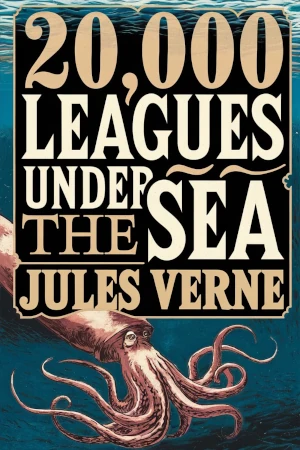
My dear fellow, pray take a seat. I have just finished dismantling a most formidable piece of machinery - Jules Verne's Twenty Thousand Leagues Under the Sea. I have cleared the drafting table of its various springs and escapements to make room for my report. It is, quite simply, the very foundation of our steam-powered fascinations, though it does require a steady hand on the pressure valve.
One must first admire the rivet-work of Verne's imagination. When this manuscript first hummed into existence in 1870, the notion of the Nautilus was not merely a flight of fancy; it was a blueprint for the future. Verne constructs his vessel with the precision of a master shipwright. The descriptions of the double hull and the sodium-line batteries provide a narrative Torque that is quite startling. He does not merely tell us the ship is marvellous; he shows us the gauges and explains the displacement. It is capital stuff, truly.
However, I must report that the Finish of the prose, while elegant, is occasionally obscured by a thick layer of taxonomic soot. Professor Aronnax has a rather tiresome habit of halting the engines to list every species of mollusc and crustacean drifting past the porthole. While I appreciate a methodical mind, there were moments when the boiler pressure of the plot dropped to a dangerously low psi. One wants to engage the ram and strike a frigate, yet one is stuck reading a lecture on marine biology. It is a bit much, even for a man of my patience.
Captain Nemo, however, is a character of superior construction. He is a piston of pure, controlled fury. His disdain for the "civilised" world above the waves is a theme that resonates through the ages. He is not merely a man; he is a force of nature, much like the electricity he so admires. The mystery of his origins acts as a superb counterweight to the more clinical sections of the text.
The pacing, or the piston-stroke of the narrative, is generally smooth, though it occasionally judders during the long stretches of underwater wandering. But when the action ignites - the battle with the giant cephalopods, for instance - the gears lock into place with a most satisfying click. It is a masterclass in atmospheric tension.
It is an essential component of any library. Without Verne's blueprints, I fear our modern steampunk engines would simply fail to turn.
Review by Arthur Penhaligon
8.4/10 from 1 reviews
Discover the best 100 best fantasy books featuring essential classics and the latest modern hits.

Explore the best fantasy book series of all time with our definitive guide to epic sagas.

Discover the best fantasy books from the last twenty years for your next epic adventure.

Explore definitive lists of the best fantasy books organized by popular and niche literary subgenres.

Discover exclusive insights and deep-dive conversations with the world's leading creators of modern fantasy fiction.

Use Google's advanced search to find the very best fantasy reviews, authors, best of lists and interviews.