Discover the Best Post-Apocalyptic and Dystopian Fiction Books of All Time

Discover the definitive list of the best post-apocalyptic and dystopian fiction books that explore the boundaries of human resilience and societal collapse. From foundational classics like 1984 by George Orwell to the haunting modern survival narrative of Cormac McCarthy's The Road, these novels provide a profound look into speculative futures.

Dystopian literature remains highly relevant in 2025 as readers seek to navigate complex themes of surveillance, totalitarianism, and climate-driven catastrophes. This curated selection includes award-winning titles such as Station Eleven which offers chilling yet essential reflections on the endurance of the human spirit.

  1. 10. The Children of Men by P. D. James
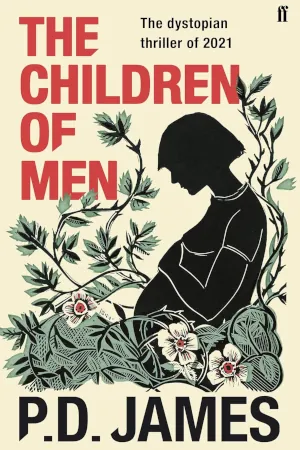
    The Children of Men by P. D. James book cover

    P.D. James delivers a bleak, philosophical thriller set in a world where humanity has lost the ability to reproduce. As the youngest generation dies off, the world descends into a lethargic, hopeless authoritarianism. The protagonist, Theo Faron, is pulled into a dangerous plot involving the first pregnant woman in decades. The novel is a stark examination of what happens to a civilization that has no future to build for. It is less about action and more about the crushing weight of despair and the desperate, flickering candle of hope in a dying world.


    View on Amazon | Read full review

  2. 9. Station Eleven by Emily St. John Mandel

    Station Eleven by Emily St. John Mandel book cover

    Emily St. John Mandel offers a refreshing, hopeful take on the post-apocalypse. Twenty years after a flu pandemic collapses civilisation, a travelling troupe of actors and musicians performs Shakespeare for the small settlements that remain. The novel moves between the "before" and "after," weaving together the lives of characters connected to a single actor. It focuses on the idea that "survival is insufficient" - that humans need art, beauty, and memory to truly live. It is a beautifully written, melancholic, yet ultimately optimistic story about what we choose to preserve when everything else is gone.

    View on Amazon | Read full review

  3. 8. Fahrenheit 451 by Ray Bradbury

    Fahrenheit 451 by Ray Bradbury book cover

    Ray Bradbury's classic is a love letter to literature and a warning against the numbing effects of mass media. Guy Montag, a fireman who starts fires instead of putting them out, serves as our guide through a society that has traded books for "parlor walls" and shallow thrills. The novel captures the intellectual loneliness of being the only person who wants to remember. It is a poetic, atmospheric work that argues that without the ability to think critically and confront uncomfortable truths, we lose our humanity. It is as much about the danger of self-censorship as government control.

    View on Amazon | Read full review

  4. 7. Brave New World by Aldous Huxley

    Brave New World by Aldous Huxley book cover

    Aldous Huxley's vision of the future is unique because it depicts a dystopia built on pleasure rather than pain. In this world, citizens are genetically engineered into castes and kept in a state of perpetual happiness through the drug Soma and endless entertainment. It is a chilling exploration of what happens when society trades its freedom, art, and emotional depth for stability and comfort. The character of the Savage provides the necessary friction, highlighting the hollow nature of a "perfect" civilisation. Huxley's masterpiece remains a terrifyingly accurate critique of consumerism and the sterilisation of the human experience.

    View on Amazon | Read full review

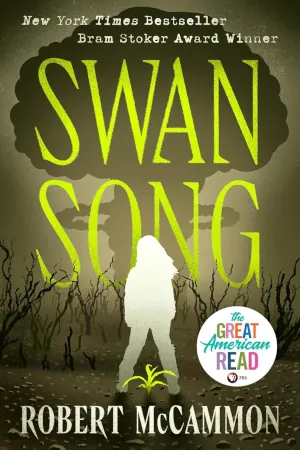
  5. 6. Swan Song by Robert McCammon

    Swan Song by Robert McCammon book cover

    Often compared to The Stand, Robert McCammon's Swan Song is a masterpiece of post-nuclear horror. After a nuclear exchange devastates the globe, the remnants of humanity struggle through a frozen wasteland plagued by the "Job's Mask." The story follows a young girl named Swan, who possesses the power to bring life back to the dead earth. It is a gritty, visceral journey that balances the sheer brutality of survival with elements of dark fantasy. The battle between the Man with the Scarlet Eye and the forces of life creates a gripping, cinematic narrative of redemption.

    View on Amazon | Read full review

  6. 5. The Stand by Stephen King

    The Stand by Stephen King book cover

    Stephen King's magnum opus is a sprawling epic of survival and spiritual warfare. After a weaponized strain of influenza wipes out most of the world, the survivors are drawn into a cosmic battle between the saintly Mother Abagail and the demonic Randall Flagg. While the "Captain Trips" pandemic is terrifying, the heart of the book lies in the rebuilding of society. King excels at character development, making us care deeply for a massive cast of ordinary people forced into extraordinary circumstances. It is a quintessential American myth about the price of freedom and the resilience of good.

    View on Amazon | Read full review

  7. 4. Oryx and Crake by Margaret Atwood

    Oryx and Crake by Margaret Atwood book cover

    Margaret Atwood presents a biting critique of corporate unchecked power and genetic engineering. Narrated by Snowman, perhaps the last human on Earth, the book shifts between a pre-apocalyptic world of high-tech gated communities and a post-collapse wilderness. It is a visionary look at how humanity might engineer its own extinction through greed and a god complex. Atwood's "Crakers" - a bio-engineered species designed to replace humans - serve as a haunting contrast to our own flawed nature. The novel is intellectually sharp, darkly humorous, and serves as a stern warning about our biological and ethical boundaries.

    View on Amazon | Read full review

  8. 3. Never Let Me Go by Kazuo Ishiguro

    Never Let Me Go by Kazuo Ishiguro book cover

    Kazuo Ishiguro offers a masterclass in quiet, creeping dread. Set in an alternative England, the story follows students at Hailsham who slowly realize their purpose in life is far more clinical and tragic than they imagined. Unlike other dystopias that focus on rebellion, this novel explores the heartbreaking ways in which people accept their fate. It is a meditation on the soul, the ethics of scientific advancement, and the fleeting nature of human connection. The horror here is not found in violence, but in the polite, resigned sadness of characters who never think to run away.

    View on Amazon | Read full review

  9. 2. 1984 by George Orwell

    1984 by George Orwell book cover

    George Orwell created the ultimate blueprint for the surveillance state. Through Winston Smith, we experience the suffocating weight of Big Brother and the systematic destruction of truth. The novel's brilliance lies in its "Newspeak," a chillingly effective method of limiting thought by limiting language. It is a terrifying study of how power sustains itself through fear, manipulation, and the erasure of history. Even decades later, its warnings about doublethink and the loss of privacy feel more like a contemporary documentary than a mid-century prophecy. It remains the gold standard for political dystopian fiction everywhere.

    View on Amazon | Read full review

  10. 1. The Road by Cormac McCarthy

    The Road by Cormac McCarthy book cover

    Cormac McCarthy's prose is as barren and beautiful as the ash-covered landscape he describes. This is not just a survival story; it is a profound exploration of paternal love in a world that has lost its soul. The lack of punctuation and standard dialogue reflects a society where the rules have vanished. Every scrap of food found feels like a miracle, and every encounter with another human is a terrifying gamble. It is a grueling read that strips humanity down to its most basic instinct: to keep the fire burning, even when there is no hope.

    View on Amazon | Read full review